
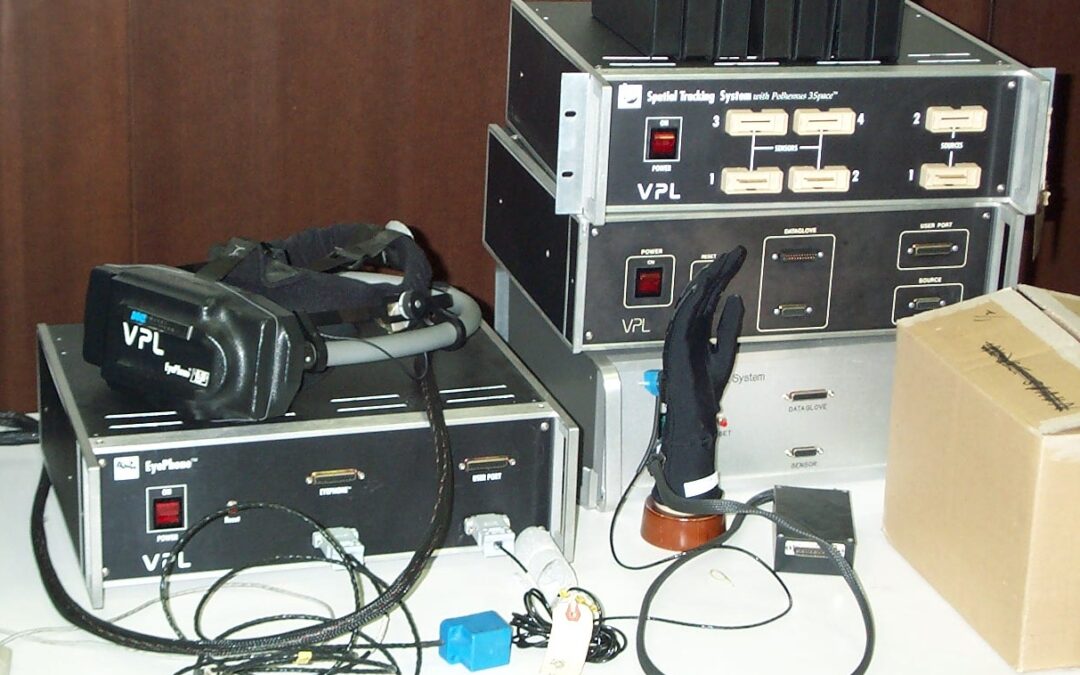
Before the future had a price tag, VPL Research printed one anyway: $49,000. That was the EyePhone HRX, the deluxe model. The standard EyePhone was a comparatively thrifty $9,400, and the DataGlove — the one that let you point at things that weren’t there — ran about the price of a car. Assemble the whole rig, computers included, and you were looking at a quarter of a million dollars to stand in a beige room and wave at a floating teapot.
VPL, founded by Jaron Lanier in the mid-1980s, was the company that coined “virtual reality” and then tried to sell it by the crate. It built the goggles, the glove, the DataSuit, and most of the vocabulary the industry still runs on. What it never quite built was a customer who wasn’t a defense lab with a discretionary budget the size of a house.
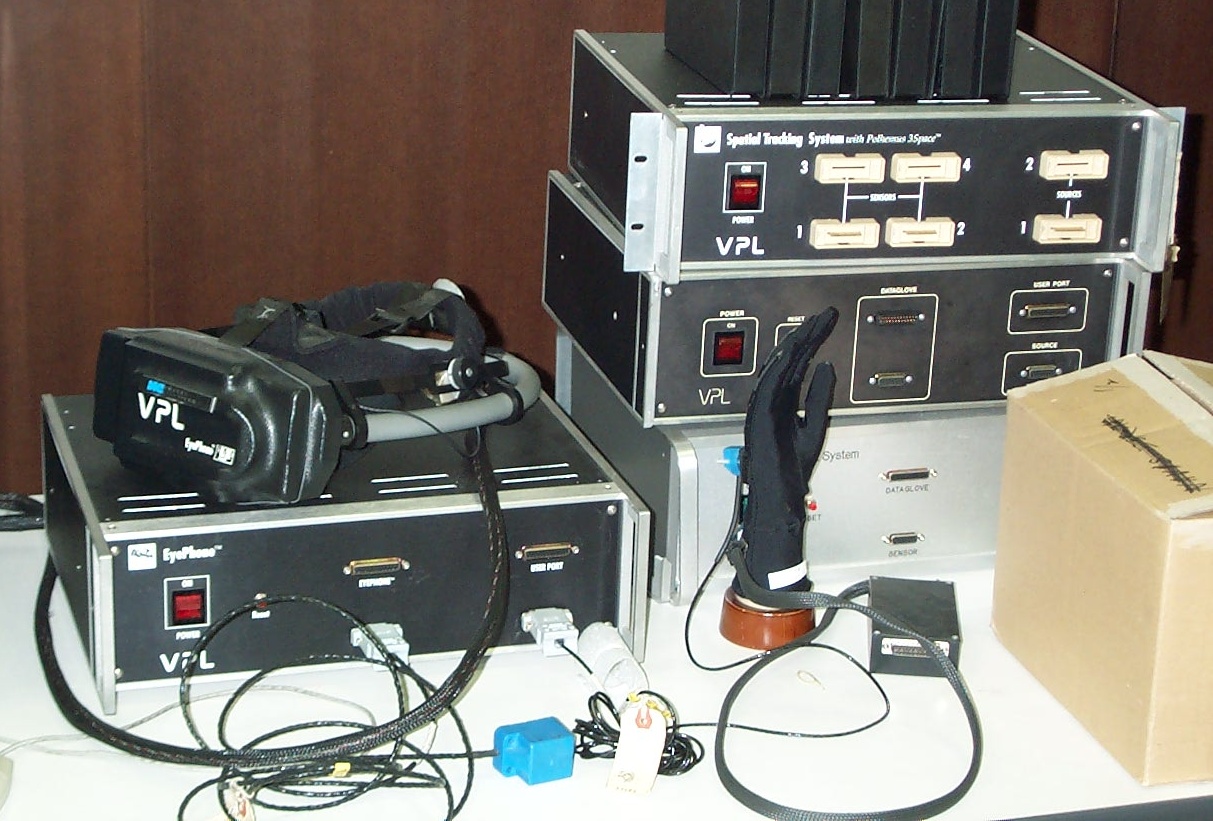
The tell is the Power Glove. Mattel licensed VPL’s glove technology, filed off the price, and shipped it to Nintendo kids for $90 — where it moved 1.3 million units. The cut-rate knockoff of the $9,000 glove was the only version anyone actually bought. That should have been the memo. It was not read.
Instead, cash-strapped and true to the era’s boundless optimism, Lanier pledged VPL’s entire intellectual property portfolio as collateral on some small bridge loans from Thomson-CSF — a French military contractor, part-owned by the French government. Here is a thing worth knowing before you use the future as collateral: when you miss a payment, the arms company keeps the future. Which is roughly what happened. Thomson walked off with the crown jewels around 1992, and in 1993 VPL’s largest shareholder forced the husk into bankruptcy — reportedly to reach the very patents already signed away.
The gear, meanwhile, was having a better year than the company. The actual VPL EyePhone and DataSuit starred in The Lawnmower Man in 1992, achieving cinematic immortality the same year the hardware was quietly losing its maker. The props outlived the payroll.
The patents drifted for the rest of the decade and, at its end, landed at Sun Microsystems — the foundational VR patents filed away in a workstation company’s cabinet, where they sat gathering dust while the dream itself waited another twenty years for hardware cheap enough to matter.
There’s a lesson in here that every VR era relearns from scratch, apparently by law: the technology was never the hard part. VPL had the goggles, the glove, the suit, the whole grammar of immersion, in 1989. What it couldn’t manufacture was a reason for anyone outside a $250,000 research budget to care. Swap Thomson-CSF for a social network, swap the $49,000 for “free, with your data,” and the arrangement is identical. Someone always ends up holding the paper on the future you strapped to your face.
VPL didn’t die because the dream was wrong. It died because it was early, overpriced, and touchingly naive about who owns the collateral when the money runs out. The goggles were real. The glove was real. The receipts, as ever, went to somebody else.
