
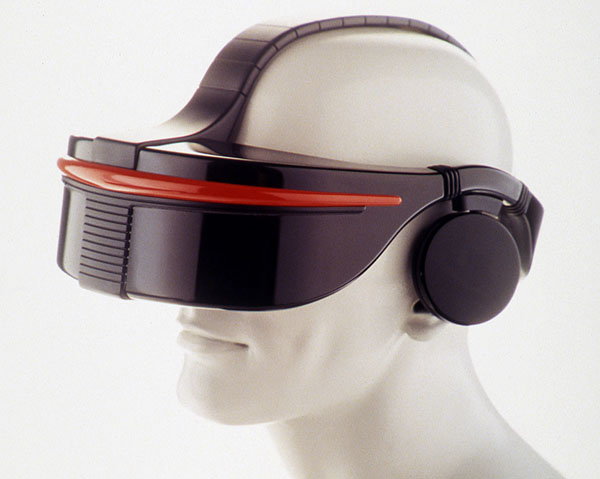
In 1993, Sega stood in front of the world’s press, showed off a $200 virtual reality headset for the Genesis, and then quietly strangled it in a back room. The official cause of death — and I need you to sit with this — was that it worked too well. The experience was so realistic, so dangerously immersive, that players might leap up mid-game and hurt themselves. Sega, in essence, cancelled its own product for being too good for you.
It is the greatest humblebrag in the history of consumer electronics. It is also, of course, complete nonsense.
Here’s what actually happened. Sega sent the thing to the Stanford Research Institute, and SRI came back with the unglamorous truth: the headset gave people headaches, made them dizzy, and made them sick — children especially. Years later, then-CEO Tom Kalinske confirmed it flatly. The Sega VR wasn’t shelved for being too immersive. It was shelved for making eleven-year-olds want to throw up. “Too realistic” simply tested better in a press release.
The genuine tragedy is that the hardware was, on paper, clever. Two LCD screens and a high-frequency inertial tracker sourced from a company called Ono-Sendai — yes, the cyberdeck brand lifted straight out of Neuromancer, because 1993 could not stop itself — a tracker that reportedly cost about a dollar a unit to make. Two hundred dollars for a home VR headset, while the arcade rigs across town ran well into five figures. On the spec sheet, Sega had lapped the entire industry.
Four games were lined up: Nuclear Rush, Iron Hammer, Matrix Runner, Outlaw Racing. Hovercrafts, gunships, cyberpunk. Nobody outside a trade-show booth ever got to touch them.
Except now they can. Decades later, the Video Game History Foundation got its hands on a CD-ROM — dated August 6, 1994 — holding the complete source code to Nuclear Rush. Rich Whitehouse rebuilt the game, reverse-engineered the headset’s communication protocol, and wired the whole thing to a modern VR rig. The one game Sega was too scared to ship is now playable on a Quest. It only took twenty-seven years and a headset Sega never actually made.
And here’s the part that should make every modern VR executive shift in their chair. The thing that killed the Sega VR in 1993 — motion sickness — was never solved. It was managed. It got comfort settings and teleport locomotion and vignette tunnels and a little warning card you scroll past. Sega’s cancellation memo, stripped of the face-saving, reads exactly like the health-and-safety insert in every VR box shipped since. The 1993 excuse note is still, thirty years on, the industry’s quietest open secret.
Sega didn’t lie about everything. The headset really was ahead of its time — it just dragged all of that time’s problems along with it, early and undiluted. The screens were real. The dollar tracker was real. The nausea was extremely real. What Sega actually shipped, in the end, was the excuse.
